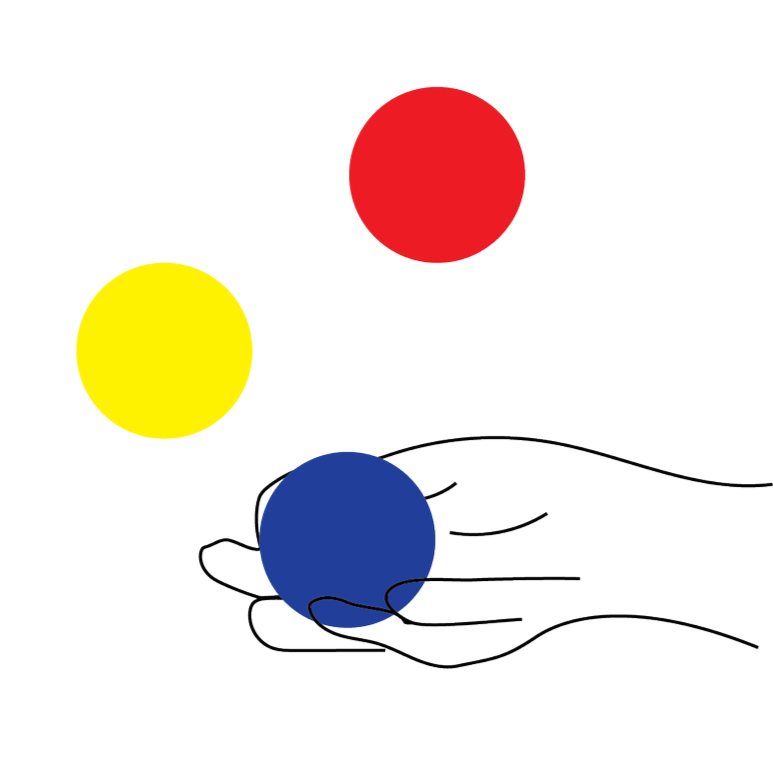
Metaphor of continuous thoughts, Watch your mind while juggling.
Continual vs continuous learning
Mistakes make progress… or are just inevitable, ubiquitous, and imbedded.
Juggling can be more about correcting errors than making perfect throws.
Page 90, The book “Error” by Daniel Kahnemann. Every throw has some measure of error.
Ironically, as we get better the throws have less error because the corrections come sooner, more often and better. Or, vice versa.
Juggling is more than just another activity but complimentary to other activities. Juggling offers a mental, physical break to other activities.
Juggling is and active break for Preparation, or continuation of other activities.
Juggling helps own your potential, improve, and continue.
Juggling is a form of Discipline, that when practiced your body remembers even when your mind wants to rest.
The art of practice where your body remembers even when the mind rests.
Art lifts the mood and juggling is a physical Artform.
Juggling is a Foundational experience.
Key 3, Juggling helps with Mental, Physical, and Theoretical understanding of how the mind, body and plan of activity works. 1,2,3
Mark Twain. Continuous improvement is better than delayed Perfection. As heard in Ted Lasso. Besides Perfection never comes.
Sleights of Mind": What the Neuroscience of Magic reveals about our brain, by Stephen Macknik and Susana Martinez-Condes
Page 180 EEG (brain) and EMG (Muscles) found that the muscles fired before the brain did, implying that muscular movement is done many times without conscious thought. It is envisioned, done, and then realized in mind later. Many movements happen automatically, subconsciously.
Refers Daniel Wegner , Psychologist MIT, Illusions of Conscious Will.
Continued thoughts and ideas…
Previous
Previous
Im'P'ortant words for juggling
Next
Next