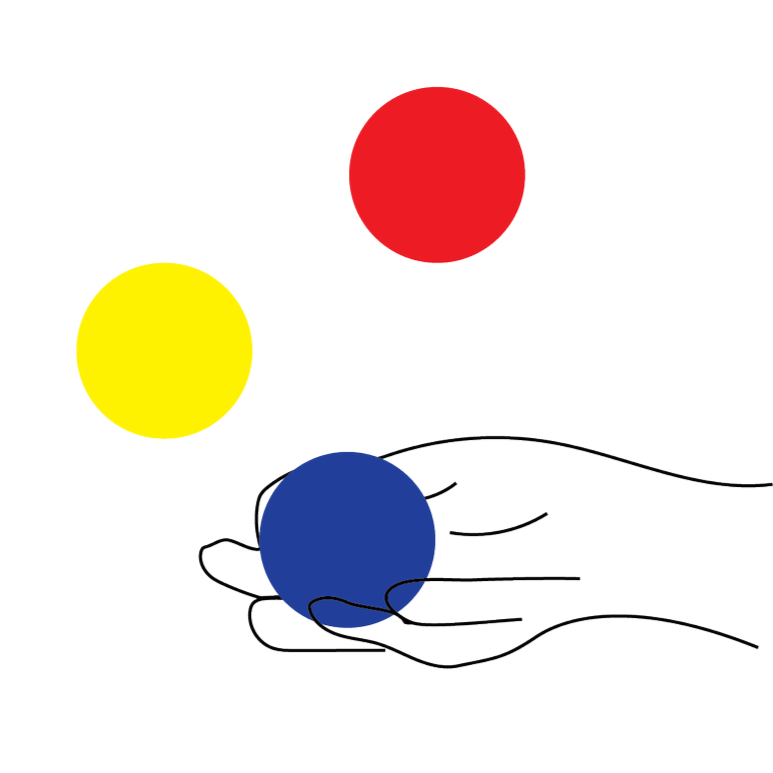
Foundational Moments
Welcome,
Sir Drop-A-Lot,
“Still finding new ways to drop the ball.”
Gather in, I am going to try to say something “Profound. “
This workshop is called, “The Pass is Paramount.”
“The Main Message:”
Every Pass has a “RUT.” There is a Risk, Uncertainty, and Thrill with every throw. We risk having to do it, uncertain of the outcome and anticipate the thrill. We practice moving through or past this RUT by throwing often.
Optional Opinion, “Everything I say, the opposite may also be true.”
Save this statement for when someone wants to try it a different way.
Let’s get started with a single ball toss.
From one hand to the other. Ok let’s do the opposite, for example: Throw the ball up and catch in same hand.
Quiet: If I need to say something to the whole group, I will ask everyone to stop and listen. Quiet with each next step.
Start up again: practice, practice, practice
Next Step: Throw the ball from one hand to the other.
Next Step: Let the ball drop just outside one foot or the other. Just in front and to the side. Take a moment to label ball good or bad.
Next Step: Throw the ball at different heights: low, medium, and high
Next Step: “Give yourself a hand.” We will now throw ball up, catch in opposite hand and add a “Clap” in between the throw and catch.
Next Step: Give yourself a better hand. Add a double or triple clap between the throw and catch.
Next Step: Announce “The Pass is Paramount!“ Focusing on the quality of the single pass, making it solid, will allow us to move forward with more complex patterns
Please, Pause before every Pass to determine the purpose. This all important Pause give the brain time to process.
Plus I have noticed that the most important words for teaching Juggling start with the letter “P.”
Next Step: Throw higher and add 4 claps between throw and catch
Partner play: Pairing up, have one person close their eyes and throw ball up and label throw good or bad. Change word “bad” to “off” if offended.
Partner catches the ball either hands the ball back or does the same themselves. Do several tosses each.
Next Step: Go back to a Single clap but clap behind the back.
Next Step: Add 2 or 3? claps behind the back.
Next Step: Vary it. Use Creative variation of 1 clap in front and 1 clap behind the back before catching.
Next step: add variation or another layer, lets add tapping the stomach. single tap.
Next step: add tap with both hands alternating before catch
Next step: mix claps with taps, creative variation
Optional Practice: Add a Snap!
Add a snap, one or both hands. (1,2,3 snaps)
Combine “Snaps, Claps, and Taps.” Just think of the time and space needed for Creative Variation.
Next step: Lets go backwards to Throw and single clap. Does it feel sold. Does it feel better than before. There can be a feeling of relaxation and simplification between throws.
Optional team building: Partner Passing
Everyone partner up in pairs. Stand beside each other. Throw from outside hand and have your partner catch with their outside hand. Reverse the throws. Laugh and label as you describe the throws as “good” or “bad”. No judgement, just simple discernment.
Next step: Grab a second ball. Throw one ball up and when it peaks throw the second.
Next step: throw both balls, high height- medium height- or low height
Next step: throw the balls in quick succession, throw the balls with delayed dwell time.
Optional 2 Ball Partner work: Partner catches both balls so the juggler can focus on the throws. “Pass is Paramount”
Partner work allows juggler to slow throws down breaking down the rhythm.
Have the Juggler throw with eyes closed the whole time to reduce the mind chatter between throws and really slow the pattern down.
Go around and check in on every person
Next Step: Grab a third ball, preferably a different color. Place two balls in one hand and one ball in the other. Start with the hand that has a pair of balls and throw the forward ball. Just throw two tosses with a successful catch. And repeat. Switching starting hands when you wish.
Next Step: Now we pursue the cascade 3 ball pattern. Throw the balls, “one-two” out of alternating hands starting with the hand that has 2 balls. Do that a few times before declaring you will throw the 3rd in the same pattern and rhythm
Optional team building: Blind Passing for timing
Have one person with 2 balls close their eyes, they are blind, and throw one ball up in the cross pattern, peaking above the opposite shoulder. The partner catches that ball at the peak and either places that ball, or a third ball that they have, into the empty hand: the hand that just threw the ball. Taking time, the person that is throwing, blind, then throws the next ball, which is caught and that ball, or a spare is placed in the open hand of the blind thrower. Practice different timing and notice how slow and rhythmical the pattern can feel. Laugh and label the throws as good or bad. Learning to feel the throw. That’s “ideomotor” or mental sensory, or “muscle memory.”
Next and final step of this workshop: Once you are throwing continuously, try throwing every 4th throw much higher than the regular pattern you catch and continue with.
Next Step: When you can throw every 4th throw much higher than your regular patter you are ready for Workshop 2.